Treated as Hostile
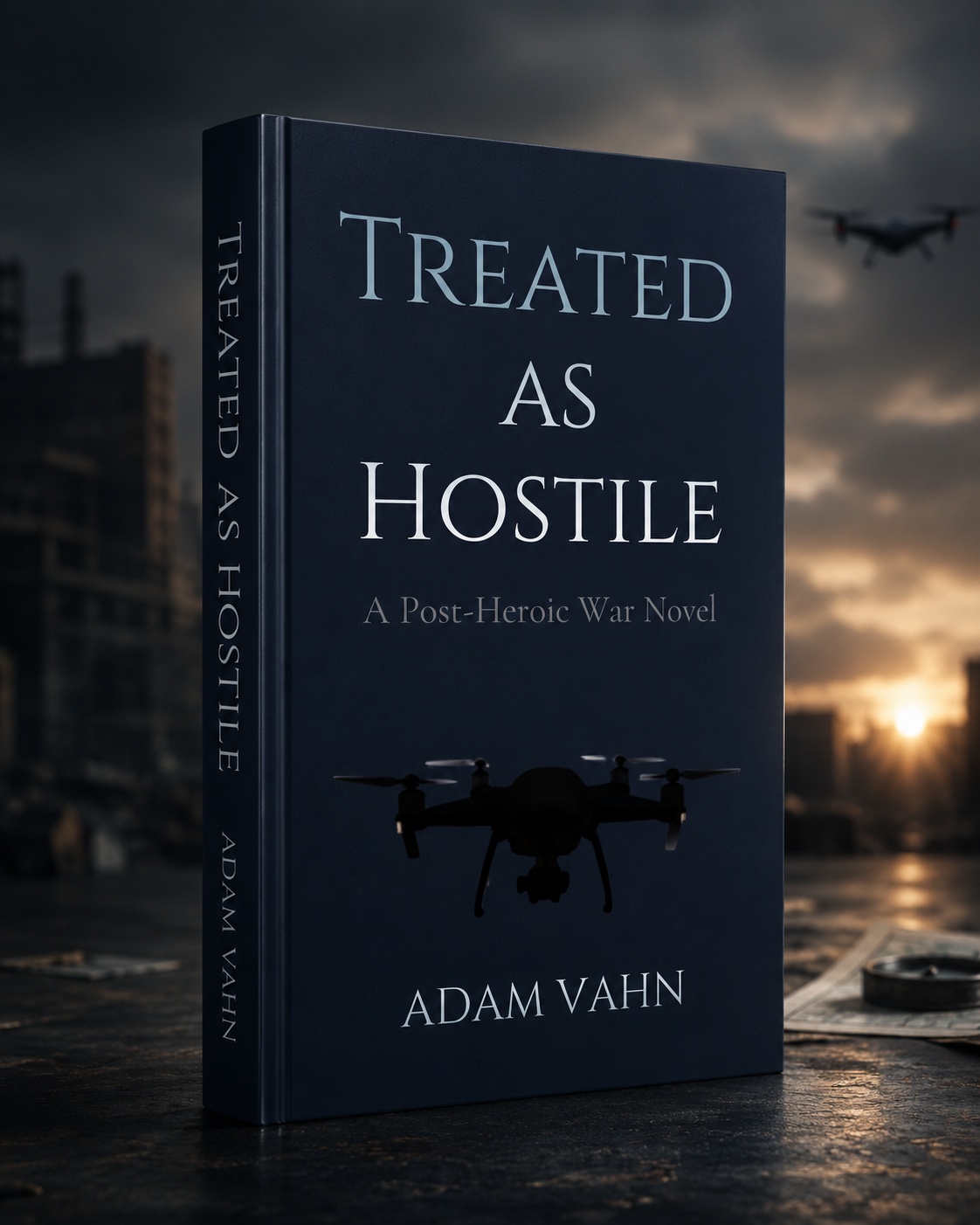
The old rules of war promised a front. This war treats movement itself as hostile.
When an evacuation boat is destroyed outside a Lake Michigan harbor, Dan is left on foot with his daughter Claire and his grandchildren, Lucy and Noah. Roads are closing. Armed groups redraw authority by the hour. The machines above them do not need to know who they are. They only need to classify what they are doing.
Dan understands machinery, back roads, and the practical weight of things. He can read a bridge, repair a failing vehicle, and recognize the instant a safe route becomes a funnel. What he cannot promise is that restraint will be recognized, surrender will be understood, or the next patrol will honor the same rules as the last.
As the family moves through abandoned homes, provisional shelters, river crossings, and towns learning to survive without a reliable state, every act of care becomes suspicious. Carrying supplies resembles smuggling. Avoiding a checkpoint resembles infiltration. Helping the wounded can make civilians look organized enough to target.
Treated as Hostile strips away the heroic language of war and leaves one question behind: what remains when uncertainty itself is treated as a threat?