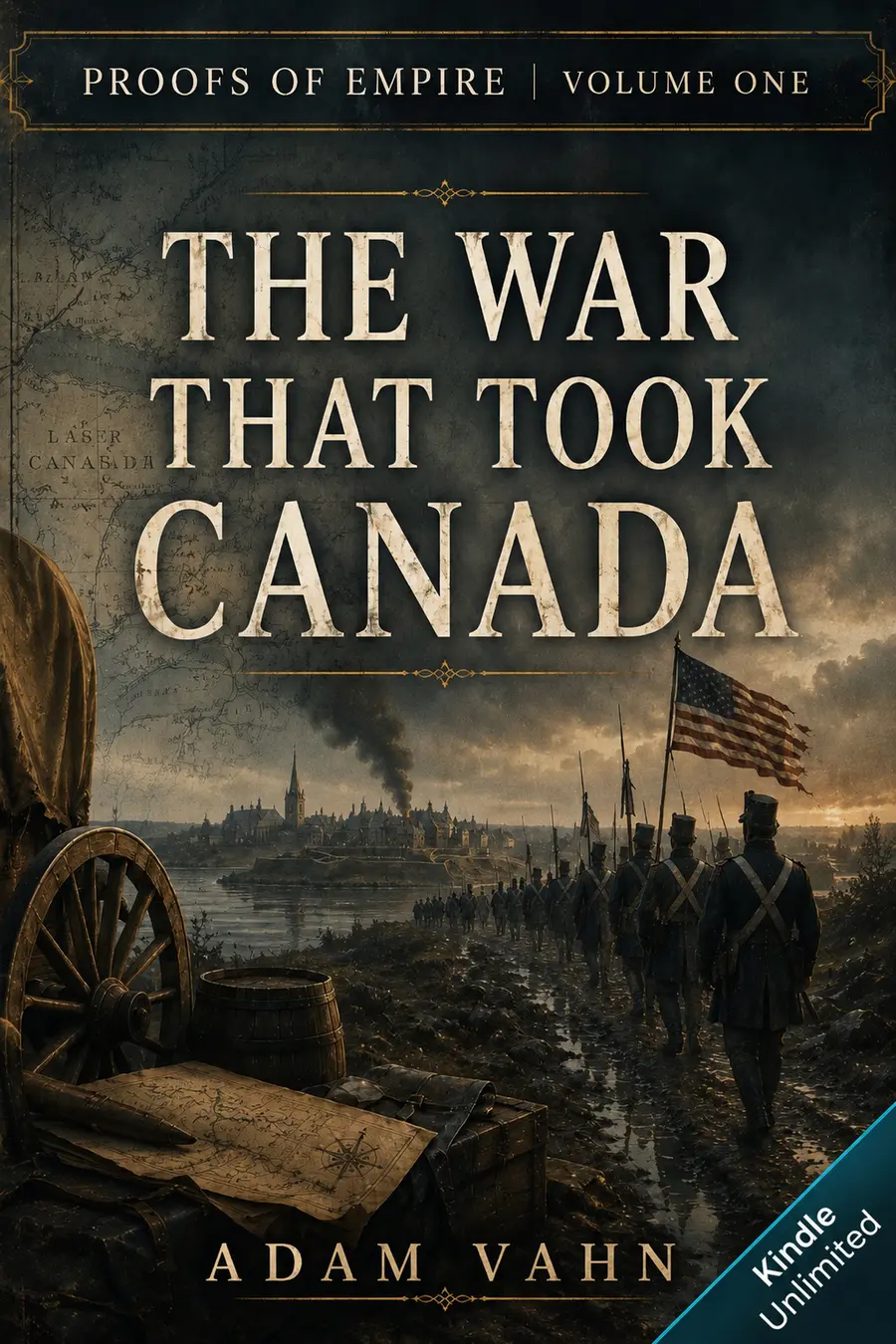
The War That Took Canada
The invasion worked because the roads were ready. A War of 1812 transformed by magazines, depots, occupation orders, and the administrative machinery that converts military victory into daily life.
Atlas of Empire · An altered North American archive
America wins Canada in 1812. Roads become borders, occupation becomes custom, and fifty years later a continent must decide whether history can be reversed without repeating it.
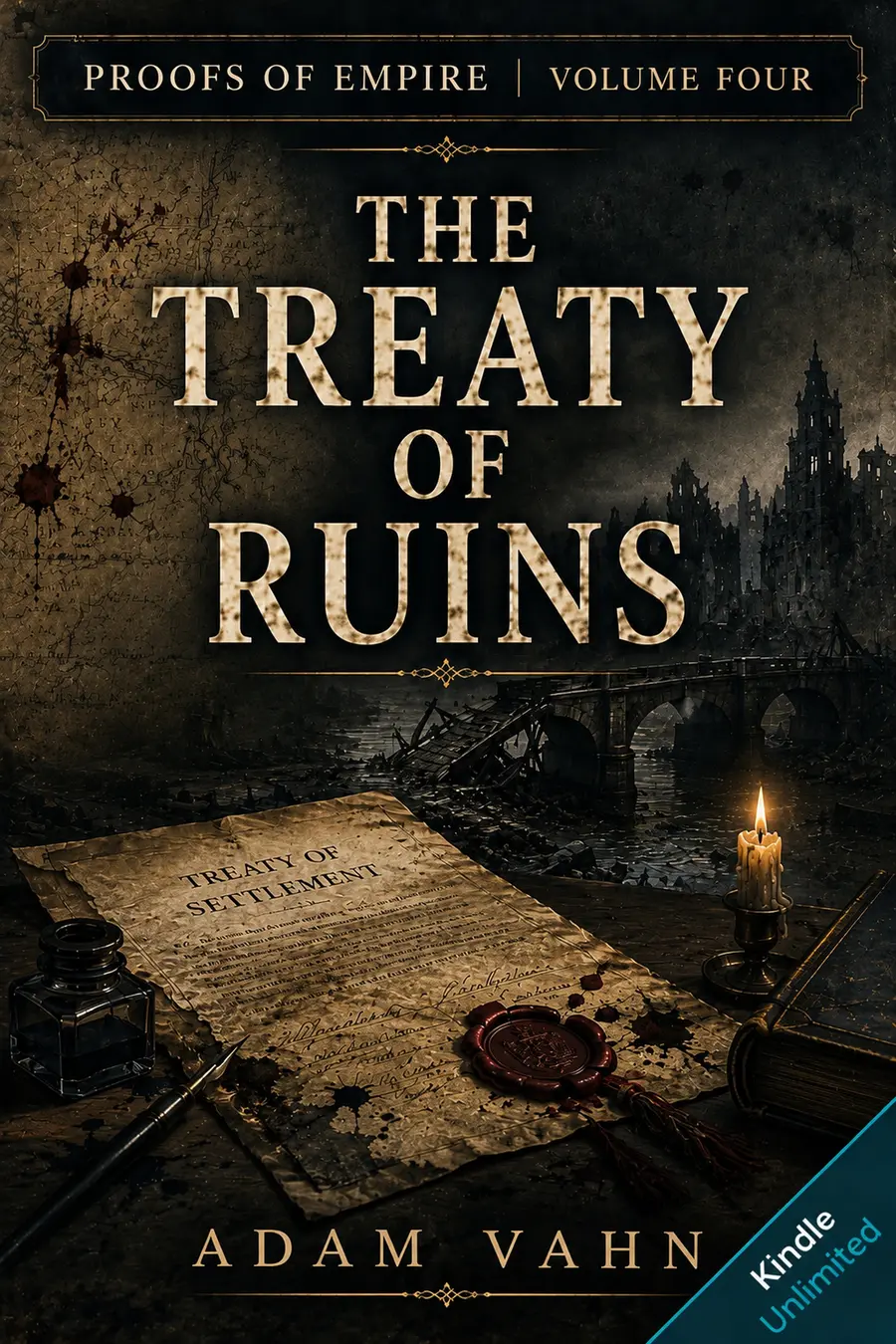
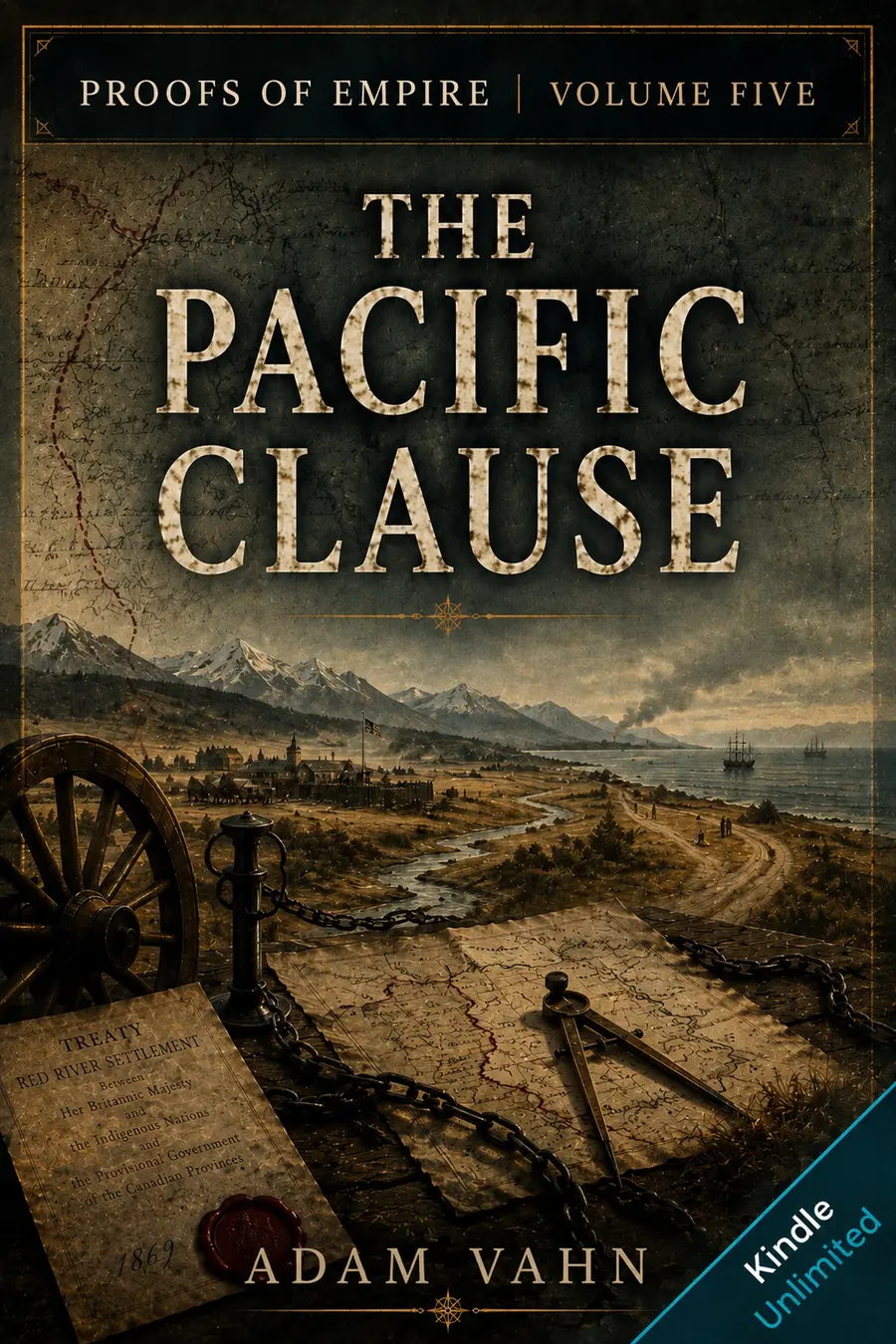
ALTERNATE HISTORY BY ADAM VAHN · ADAM VAHN
The common hinge
The point of divergence is an earlier American commitment to a professional standing army—and the roads, depots, officers, manuals, correspondence, medical support, supply chains, and administrative culture required to keep it functioning.
That competence makes the republic more dangerous sooner. It can win more than it can govern, promise more than it can reconcile, and extend farther than its own politics can bear.
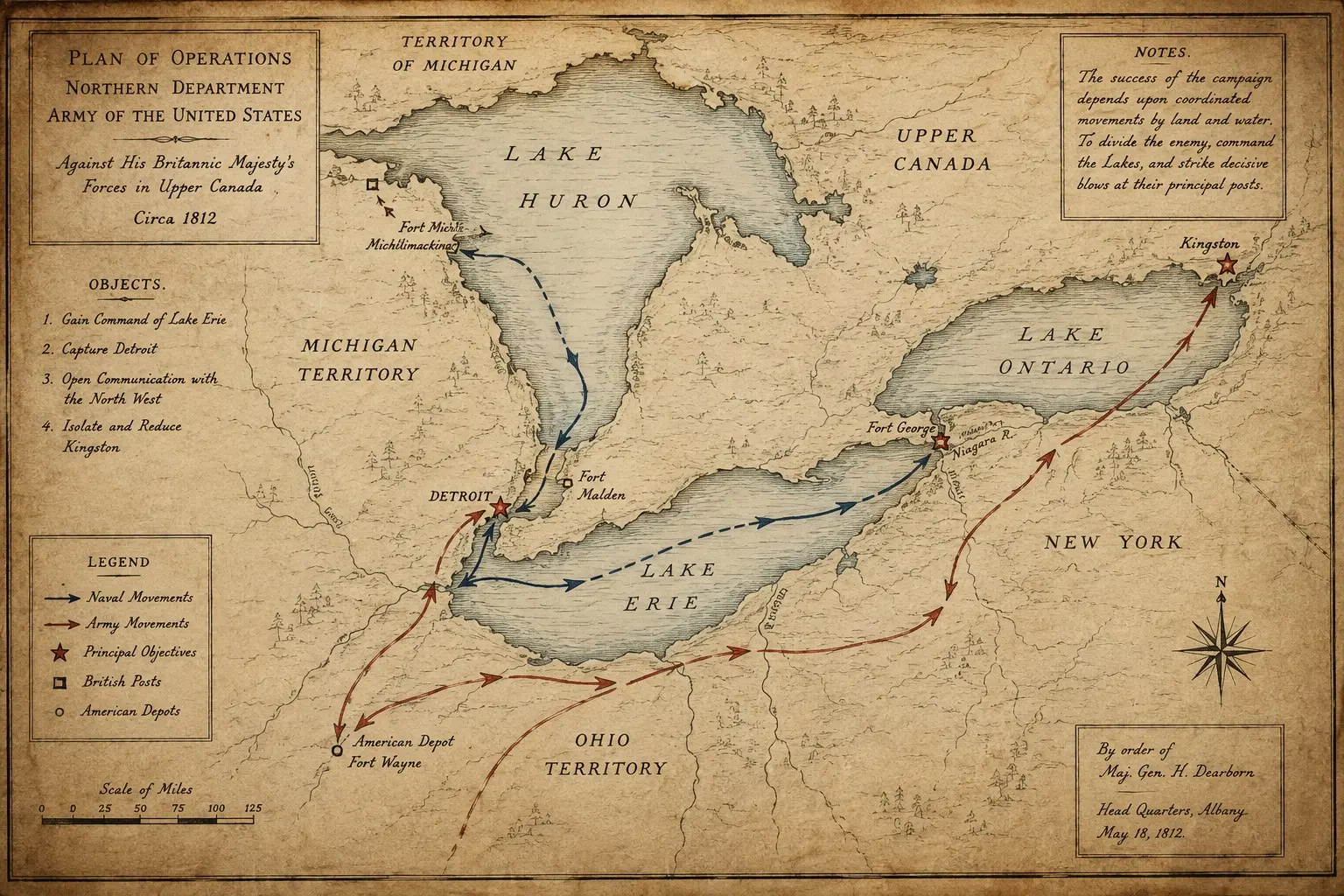
The continent, redrawn in stages
A border is never only a line. It is the outcome of roads, orders, schoolbooks, oaths, shipments, treaties, and the offices that teach people to call occupation ordinary.
An earlier commitment to a professional standing army turns roads, magazines, lake craft, trained officers, and clerks into a victory the republic is not politically prepared to absorb.
Plates II–VI
Read in order for the full continental arc. Each volume still carries its own local pressure, conflict, and resolution.
The invasion worked because the roads were ready. A War of 1812 transformed by magazines, depots, occupation orders, and the administrative machinery that converts military victory into daily life.
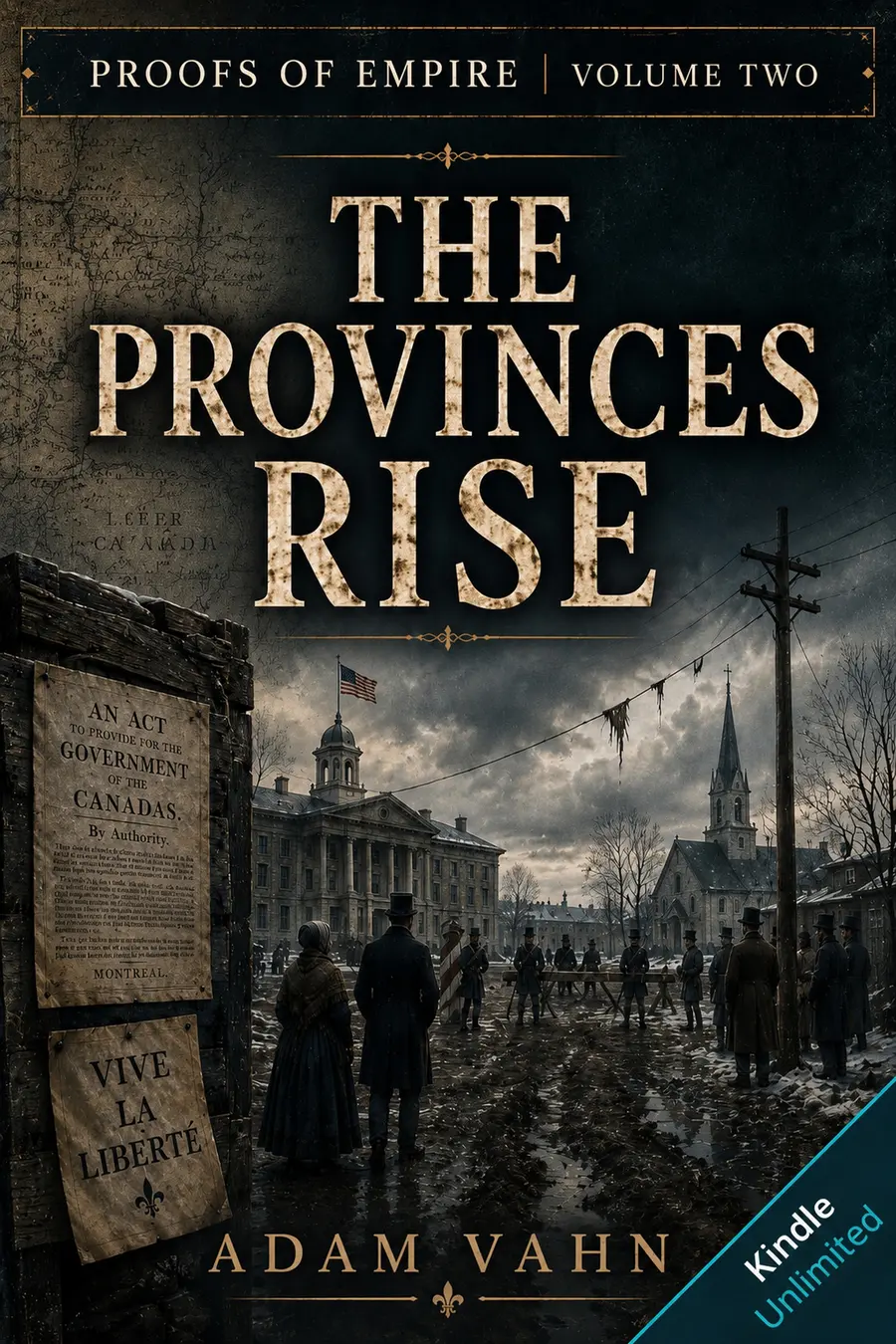
Fifty years of obedience. None of it belonging. The conquered provinces have been renamed, taxed, schooled, and improved. Then a civil war to the south turns silence into an opening.
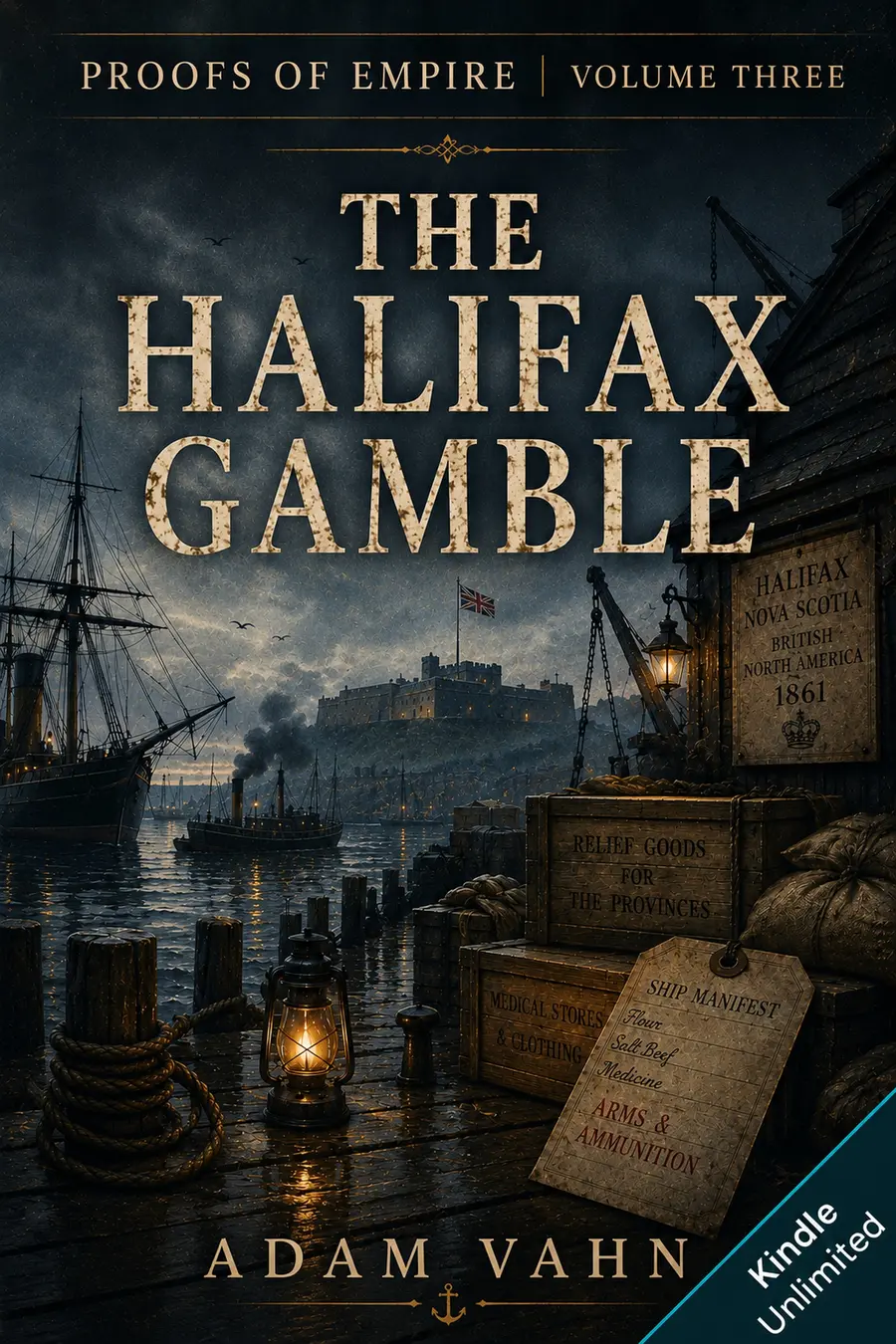
Rebellion does not feed itself. Aid arrives by sea under neutral papers, and every shipment forces survival and sovereignty onto opposite sides of the same ledger.
A country was declared before it existed. Now someone has to sign for it. Ports, prisoners, debts, amnesties, and railway promises decide what the armies cannot: whether restoration can be written without becoming another occupation.
The conquest is finished. The map is not. The concluding volume turns west toward Red River, the Pacific, and the dangerous distance between a purchase and a people's consent.
From the author's notebook · Spoiler free
“Start anywhere, finish satisfied. Continue elsewhere, understand more. Read everything, watch the continent become something else.”
Atlas is designed as four related shelves, not a required course. A book may carry a continent inside it, but the reader must first be able to touch a room, a road, a receipt, a weapon, a sick horse, a port stamp, a frozen wagon wheel, or a fouled well.
The larger history should arrive through practical wants: move the freight, protect the register, refuse the signature, repair the bridge, keep the mule alive. Theme arrives through interference.
The larger architecture
The fracture sequence: conquest, occupation, resistance, restoration, treaties, and the paper trail of legitimacy.
Family, slavery, debt, law, war memory, abolition pressure, and the systems carried home from conquest.
Sovereignty, ports, roads, customs, foreign capital, and the danger hidden inside a guarded commercial corridor.
Freight, claims, railways, land conflict, border towns, winter camps, ports, wells, and dangerous paper.